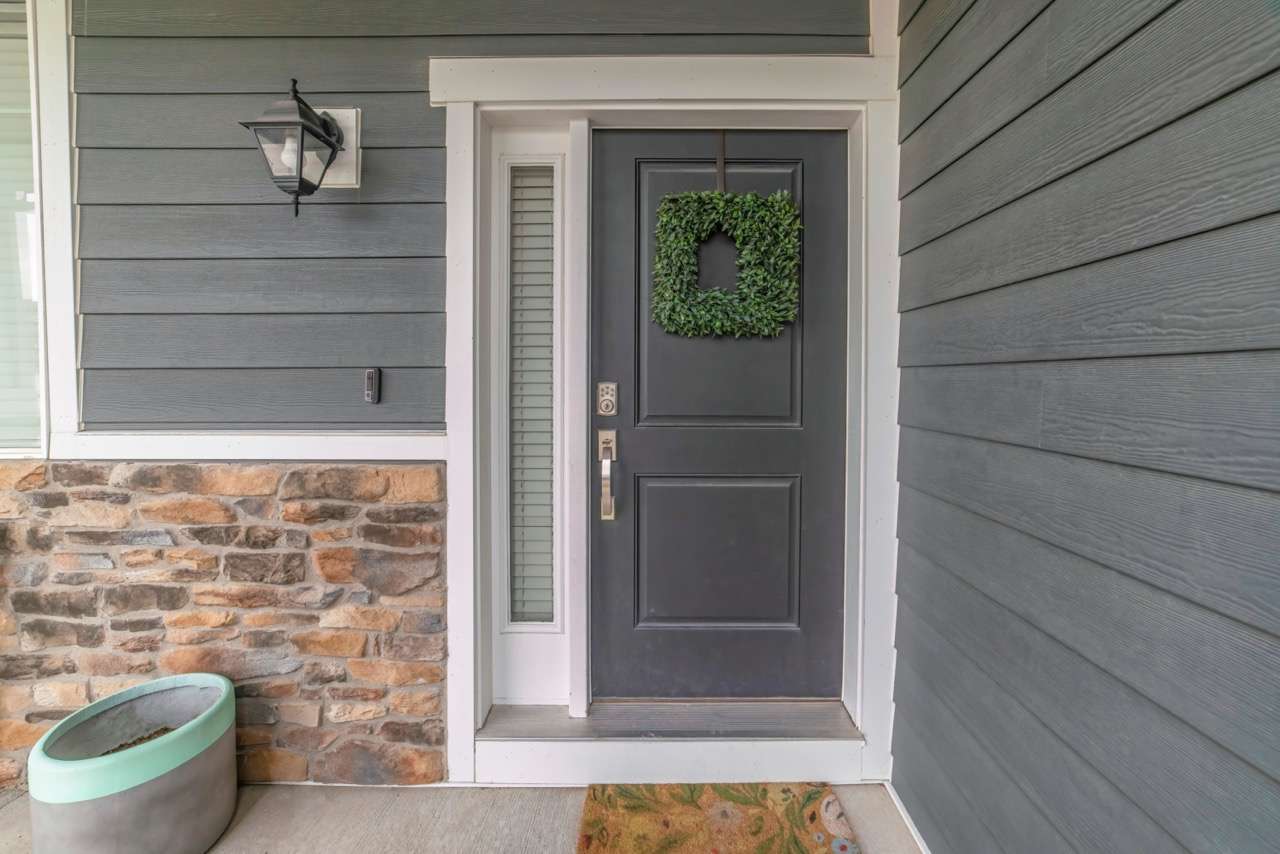
A front door makes a strong first impression, but you will experience it most often through ordinary tasks: unlocking it with shopping bags in hand, welcoming visitors, moving furniture and checking that it has closed properly.
Those moments deserve attention before you choose the colour.
A replacement that looks right may still have inconvenient hardware, an opening arrangement that conflicts with the hallway or glazing that provides less privacy than expected.
For homeowners across the GTA and Hamilton area, a useful selection process considers the complete entrance. The door leaf is one part of an arrangement that may also include a frame, sidelights, a threshold, hardware and surrounding finishes.
Start With the Entrance You Actually Use
Some households enter mainly through the front door. Others use a side entrance or garage connection for everyday arrivals.
That difference affects priorities.
If the front door handles most daily traffic, convenient operation and a practical arrival area may matter more than decorative detail. If it is mainly used by visitors, you may focus on visibility, approach lighting and how the entrance connects with the hall.
Describe what happens there:
- Who uses the entrance regularly?
- Are bags, pushchairs or mobility aids brought through it?
- Do children operate the door independently?
- Is the entrance used for deliveries?
- Where do people stand while unlocking it?
- What currently makes arrival inconvenient?
These observations help define the result you want rather than simply replacing the existing door with a newer-looking version.
Identify What You Want to Keep
Before reviewing new designs, decide which parts of the entrance are intended to remain.
You may want to retain sidelights, interior trim, a storm door or particular hardware. Alternatively, you may be considering a complete change.
Do not assume these elements will work with every replacement.
Ask for the proposed scope to identify:
- The door itself.
- The frame.
- Glazed sections beside or above it.
- Threshold details.
- Interior and exterior trim.
- Hardware and accessories.
- Adjacent finishes affected by installation.
Our exterior doors should be considered alongside those surrounding components. A complete entrance replacement and a more limited project need different discussions.
Review the Clear Passage
The overall width of an entrance is not the same as the space available to pass through it.
Frames, door position and the opening arrangement influence the usable passage. If the existing entrance feels restrictive, explain what you struggle to move through it.
Examples might include:
- A pushchair.
- A wheelchair or walking aid.
- Large deliveries.
- Furniture.
- Two people arriving together.
Ask for the proposed clear opening to be explained. Do not judge it from the nominal door size alone.
If changing the opening is being considered, that introduces work beyond selecting a different door. Its feasibility and any relevant requirements need assessment before the change is priced as part of the project.
Check the Swing Against the Hallway
A door can open fully in an empty entrance and still conflict with everyday furnishings.
Include the coat cupboard, shoe storage, bench and nearby internal doors when reviewing the proposed swing.
Consider:
- Whether the handle approaches a wall or cabinet.
- Whether an open door blocks another route.
- Where someone stands to close it.
- Whether cupboard doors can be used conveniently.
- Where wet footwear and bags will be placed.
The opening direction should be recorded clearly in the order. Review it from the agreed viewpoint so “left” and “right” are not interpreted differently.
Do not change the swing simply because another arrangement looks better on paper. Its suitability needs to be checked against the entrance construction and intended use.
Choose Glazing With the View in Mind
Glass can bring daylight into a hallway, but the privacy result depends on the selected design and the views through it.
Think about what someone can see from the approach, pavement or neighbouring property. Also consider the reverse view from indoors.
A small sample may help compare appearance, but it cannot fully reproduce the entrance’s lighting and sightlines.
Ask to review:
- The amount and position of glazing.
- Clear versus obscured options.
- The specific glass pattern.
- Sidelights and any glazing above the door.
- Views toward private rooms.
- Whether additional coverings are planned.
If privacy is important, describe the situation rather than relying on a label such as “decorative glass.”
For example:
We want daylight in the hall, but we do not want a direct view toward the living room from the front path.
Try the Hardware as a Daily Task
Handles and locks influence how the entrance feels every time you use it.
Where possible, try the proposed hardware or a representative display. Check the grip, reach and sequence needed to unlock, open and secure the door.
Consider whether:
- The handle is comfortable to hold.
- The lock is easy to locate and operate.
- The hardware suits household reach and dexterity.
- Keys or access devices are practical for regular users.
- Replacement parts and servicing information are available.
If you want electronic access, discuss compatibility, power arrangements, backup access and maintenance before making it part of the order.
Avoid assuming that a particular lock style or a “security” description guarantees a complete security outcome. The specified door assembly, installation and hardware need to be considered together.
Compare Documented Product Information
Material descriptions and sales terms do not tell you everything about a door.
Two products with a similar appearance may have different construction, glazing, hardware and documented performance.
Ask which information applies to the exact configuration being quoted.
| Selection Area | What to Compare |
|---|---|
| Door construction | The specified product and available options |
| Glazing | The selected glass arrangement and documentation |
| Hardware | Included components and operation |
| Performance | Relevant ratings for the proposed assembly |
| Finish | Care requirements and available colours |
| Coverage | Written product and installation terms |
Do not transfer claims from one display model to another configuration without confirmation.
Likewise, energy savings, sound reduction and comfort improvements should not be presented as identical for every replacement.
Examine the Threshold and Approach Together
The entrance continues beyond the door frame.
Look at the interior floor, exterior landing and the point where people step across the threshold. Note any existing difficulty with footing, clearance or water collecting nearby.
Explain those concerns before the product is selected.
A replacement door should not be assumed to resolve an unrelated landing or drainage problem. If surrounding work is needed, identify who will assess and complete it.
Also discuss mats and floor finishes. An arrangement that works with a bare floor may become awkward once a thick mat is placed behind the door.
The objective is a coordinated entrance, including the surfaces people use immediately inside and outside it.
Coordinate Colour With the Features That Remain
Once the practical arrangement is clear, review the finish against the existing exterior.
Compare samples beside brick, cladding, window frames and trim where possible. Look at them in different daylight conditions and from the usual approach.
A colour that looks restrained on a small sample may become more prominent across the full door. Hardware and glazing can also change the overall effect.
If other exterior updates are planned, discuss the intended direction now. You do not need to replace everything together, but the door selection should not depend on an uncertain future redesign.
Define the Finished Installation
Before approving the order, ask what the entrance will look like when the contractor leaves.
Clarify responsibility for:
- Removal and disposal.
- Assessment of exposed conditions.
- Installation and adjustment.
- Interior trim.
- Exterior finishing.
- Painting or staining, where relevant.
- Reinstatement of accessories.
- Cleanup.
If additional damage is discovered during removal, the process for documenting and approving further work should be clear.
Finally, review the product, dimensions, swing, glazing, finish and hardware together. A correct measurement does not prevent a misunderstanding about one of those selections.
Frequently Asked Questions
Should I replace the frame when choosing a new front door?
That depends on the existing condition and proposed product. Ask which components will be retained or replaced and why the arrangement is suitable. Do not assume that every front-door project includes the same frame and finishing work.
How do I choose front-door glass without losing privacy?
Consider the glazing’s position, size and specific obscured pattern alongside the views through your entrance. Explain which areas you want to screen from outside and review product samples rather than relying only on catalogue photographs.
Can I change the direction my front door opens?
A different arrangement may be possible, but it needs assessment against the frame, surrounding construction and entrance layout. Include hallway furniture, nearby doors and the exterior approach in that discussion before finalising the order.
Choose an Entrance That Works Every Day
The right front door combines an appearance you like with comfortable access, suitable glazing and hardware you can use confidently.
Planning a new entrance for your GTA or Hamilton home? Request a quote from PanoramaLux to discuss the complete arrangement before choosing the final design.