A foggy window can look like a window problem, but the location of the moisture changes what it means.
Droplets on the room-facing glass, dew on the exterior surface and moisture between sealed panes are different situations. Treating them as the same issue can lead to an unnecessary replacement—or leave the actual concern unresolved.
Before choosing new windows, establish where the moisture appears and what happens around it. You do not need to dismantle anything or reach outside an upper-storey opening.
For homeowners across the GTA and Hamilton area, a few careful observations can make the next conversation much more useful.

Start With the Three Possible Locations
The first distinction is between moisture on an accessible surface and moisture within the glazing.
| Moisture Location | What It May Mean | Useful Next Step |
|---|---|---|
| Room-facing surface | Condensation involving indoor moisture and a cooler surface | Record conditions and review the room as well as the window |
| Exterior surface | Outdoor condensation or dew | Observe when it forms and clears |
| Between panes of a sealed glass unit | A possible problem with the insulating glass seal | Have the affected unit identified and assessed |
Window manufacturer Andersen distinguishes interior and exterior condensation from moisture between panes. Its guidance explains that room-side condensation does not itself establish glass failure, while between-pane condensation can indicate a broken insulating-glass seal.
These distinctions provide a starting point. They do not replace an assessment of the particular window.
Check the Room-Facing Surface Safely
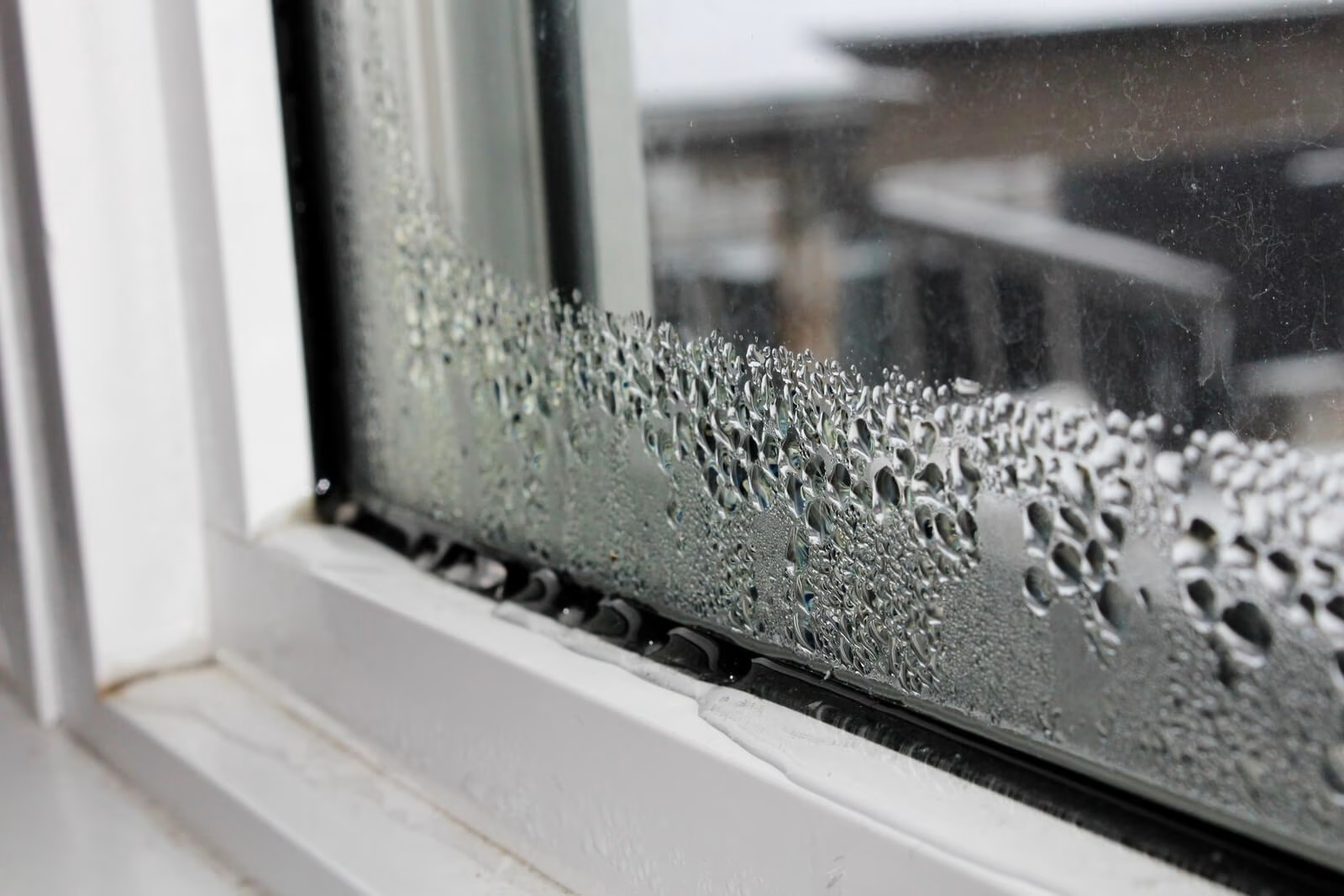
If the glass is intact and comfortably accessible from indoors, you may be able to establish whether the moisture is on that surface by gently wiping a small area with a soft cloth.
Follow the product’s care instructions. Do not scrape the glass or use abrasive tools to test it.
If the visible moisture clears where you wipe, that helps identify its location. If it does not, the mark may be elsewhere—or it may not be moisture at all.
Avoid reaching over furniture, standing on unstable objects or leaning outside to investigate.
Take a photograph before wiping if you want to document the pattern. Include a wider view so the affected window can be identified later.
Room-Side Condensation Does Not Automatically Mean Replacement
Condensation can form when moisture in indoor air meets a sufficiently cool surface. The window’s surface temperature and the conditions around it therefore matter together.
Andersen’s care guidance identifies indoor moisture as a factor in room-side condensation. It also notes that window coverings can affect conditions near the glass.
Before concluding that the window needs replacing, record:
- Which room is affected.
- Whether several windows show the same pattern.
- When the droplets appear.
- Whether cooking, bathing or clothes drying occurred nearby.
- Whether coverings were open or closed.
- Whether the moisture clears later.
These observations help frame the assessment. They should not be used to assign blame to either the household or the installation without further investigation.
Exterior Condensation Needs a Different Interpretation
Moisture on the outside face can be difficult to distinguish from an indoor film, especially on upper-storey windows.
Outdoor condensation can occur under particular combinations of humidity, surface temperature and weather. Andersen identifies conditions such as still air and clear nights among the factors associated with exterior condensation.
Watch what happens over time from a safe location. Does the haze clear as conditions change? Does it appear at similar times on particular elevations?
Do not climb a ladder to confirm its location.
Exterior dew alone is not a sound basis for recommending a complete replacement. If you are uncertain whether the moisture is outside or between the panes, describe that uncertainty and provide photographs.
Between-Pane Moisture Needs Product-Specific Assessment
A haze that cannot be reached from either exposed surface may be within a sealed insulating glass unit.
If that is confirmed, the next question is which component needs attention. A glazing problem does not automatically establish that the surrounding frame and entire opening must be replaced.
Gather any available:
- Manufacturer or product information.
- Installation date.
- Previous service records.
- Warranty documents.
- Photographs showing the affected pane.
A label may be useful where it is safely visible. Do not remove parts to find it.
Ask what options apply to that specific product and condition. If full replacement is recommended, the explanation should address why retaining other components would not provide an appropriate result.
Do Not Assume Every Wet Sill Is Condensation
Water on a sill or staining around trim may have more than one explanation.
Record what you can see before naming the cause. For example:
Water collects at the lower corner during rain, but we have not seen droplets across the glass.
That is different from:
Droplets form on the room-facing glass overnight and run onto the sill.
The timing and path need assessment. A photograph of a wet corner alone cannot establish whether the concern involves condensation, water entry or another condition.
If water is actively entering, explain that directly when arranging help. Do not wait to complete a lengthy observation exercise before reporting it.
Record a Pattern Without Turning Monitoring Into a Delay
A short record can help distinguish an occasional event from a recurring problem.
Use a simple format:
| Date and Time | Location | Observation | Relevant Context |
|---|---|---|---|
| Monday morning | Main bedroom | Droplets on room-facing glass | Curtains closed overnight |
| Tuesday afternoon | Kitchen | Haze visible, location uncertain | Photograph taken |
| Friday evening | Rear window | Water at lower corner | Rain at the time |
Record only what you know. If you did not check whether it had rained, leave that detail uncertain.
Monitoring should support the assessment, not postpone attention to recurring wetting, damaged finishes or active water entry.
Avoid a Universal Humidity Number
A single humidity target should not be treated as an answer for every home, window and outdoor condition.
If indoor moisture management is part of the discussion, use guidance appropriate to the building, equipment and conditions. The cause should not be inferred from one reading taken at an unrelated location.
A humidity reading can provide context if you already have a suitable device. Record where and when it was taken.
Avoid making major adjustments to household ventilation or heating based solely on a photograph of the glass. Where broader building conditions need investigation, ask which professional is appropriate.
Connect Any Replacement Recommendation to the Findings
If replacement is proposed, ask what it is intended to improve.
The recommendation should distinguish between:
- A confirmed defect in the existing unit.
- A concern with the surrounding installation.
- A household preference for different operation or appearance.
- A wider moisture issue that may require separate attention.
Our window and door installation service should be discussed in relation to the actual opening and project goals.
Ask what replacement would address and what would remain outside the work. New windows should not be presented as a guaranteed cure for every source of moisture in the home.

Keep the Explanation With Your Project Records
After assessment, retain the photographs and written recommendation.
You should be able to identify:
- Where the moisture was observed.
- What was confirmed.
- What remains uncertain.
- Which component is affected.
- What action is recommended.
- Whether another assessment is needed.
If work proceeds, keep the final scope and relevant product documents too. Should moisture appear again, these records will provide a clearer starting point than simply reporting that the window was previously replaced.
Frequently Asked Questions
Does condensation mean my windows have failed?
Not automatically. Room-side moisture, exterior condensation and moisture between sealed panes have different implications. Establish the location first, then have recurring concerns assessed before deciding whether replacement is appropriate.
Can moisture between panes be wiped away?
Not through ordinary surface cleaning if it is genuinely inside a sealed glass unit. Have the location and affected product confirmed. Do not dismantle the glazing or apply improvised treatments to investigate it.
Will replacement windows eliminate condensation?
That should not be promised without understanding the situation. A replacement can address a defined window or installation concern, but indoor conditions and other building factors may still need attention. Ask what the proposed work is expected to resolve.
Locate the Moisture Before Choosing the Next Step
Knowing whether moisture is inside, outside or between the panes makes the conversation more specific—and helps keep replacement decisions tied to the findings.
If you are considering new windows for your GTA or Hamilton home, request a quote from PanoramaLux and include photographs and a description of the moisture you have observed.